


Three.five percent of income tax
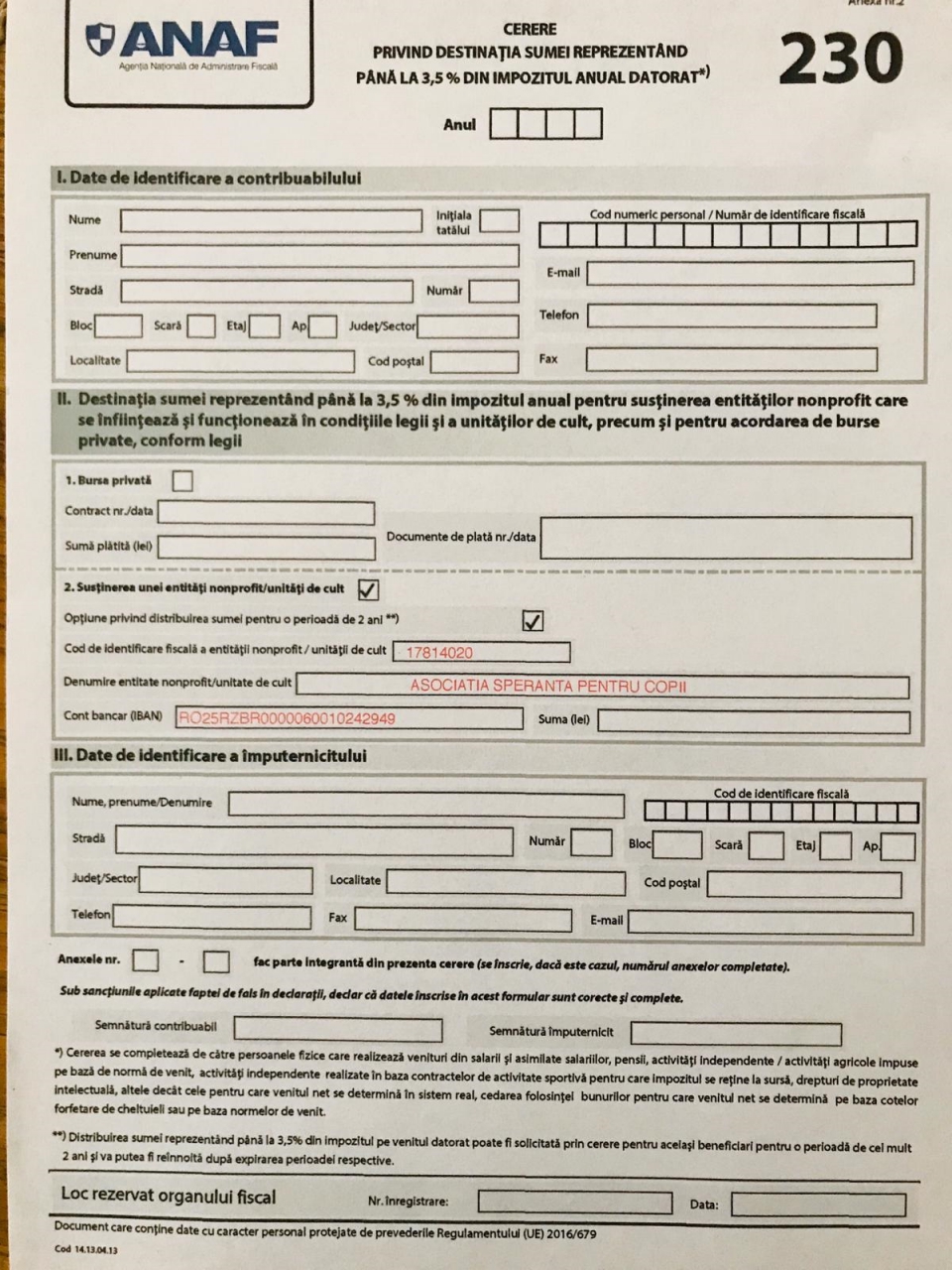
Three.five percent of income tax

3.5% through the provision of the Tax Code, individual taxpayers are able to direct 3.5% of income tax by a nonprofit entity established under Ordinance 26/2000 on associations and foundations.
This mechanism has a number of advantages for all parties involved - citizens, organizations and state:
- Is a democratic mechanism contributes to the transparency of fiscal and budgetary policy
- Assist NGOs in their efforts to solve various social problems
- To enable citizens to contribute to efforts to solve various social problems but without incurring additional cost
- Relieve budget considering that the services provided by NGOs are generally of high quality and efficient in terms of cost as NGOs mobilize financial resources from various sources and many volunteers work involves
- Creates a link between the state, citizens and organizations contributing to the development of civil society and social capital
It creates a mechanism by which a citizen can decide how they spend 3.5% of income tax due, directing that amount to a charity. There was thus a form of partnership between citizens, tax authorities and NGO sector. Basically citizen says state how they want to spend a part of his duty.
Warning, this amount is not a sponsorship or donation but is essentially part of the state budget is directed by each citizen by the NGO sector. The law is considered by many as indirect support by the non-profit state model "transition philanthropy" because of its application only in Eastern Europe.
The 1% in Central and Eastern
The 1% operating in several countries in Central and Eastern Europe: 1997 in Hungary and 2002 in Lithuania, Slovakia and Poland. The system to be introduced in the Czech Republic.
In Hungary about 33% of taxpayers used this system to direct a portion of their tax (3.5%) by NGOs or religious organizations.
Principles of the system
Based on many years of experience particularly in Hungary, but also in other countries in which the system operates already been established a number of principles that 3.5% system must meet:
- Confidentiality taxpayer - employer: is designed to protect taxpayer in situations that wants to direct its percentage by organizations whose values are at odds with the values of the employer (eg an employee of a company polluting wants to direct the organization of protection environment).
- Confidentiality taxpayer organization: is to protect the taxpayer before the disclosure of personal information (name, income, address, place of work) to the beneficiary organization without the express consent of the taxpayer.
- Lawful collection of funds: is to avoid corruption mechanisms or providing direct financial compensation to the taxpayer in exchange for targeting. In addition, this principle must ensure that the funds reach the real organizations, transparent and effective and not fictitious organization, inactive or political affiliation.
- Ease of use for all parties involved: taxpayer organizations, employer authority.
- Transparency reporting: all stakeholders should provide some basic information: the amount directed, basic demographic information about taxpayers who chose to use this feature, information about organizations that have received over a threshold amount.
RESOURCES:
Statement 230 - for taxpayers with income from wages
Statement 200 - for taxpayers (and) income from other sources